 Arctic Council Working Group
Workshop on Underwater Noise
Share experiences and knowledge, define realistic, near-term pathways for managing underwater noise in Arctic waters, and shape PAME’s future work on the topic.
3 February 2027 – hybrid workshop on the margins of the 3rd Polar Maritime Seminar
Underwater Noise in the Arctic: Understanding Impacts and Defining Solutions
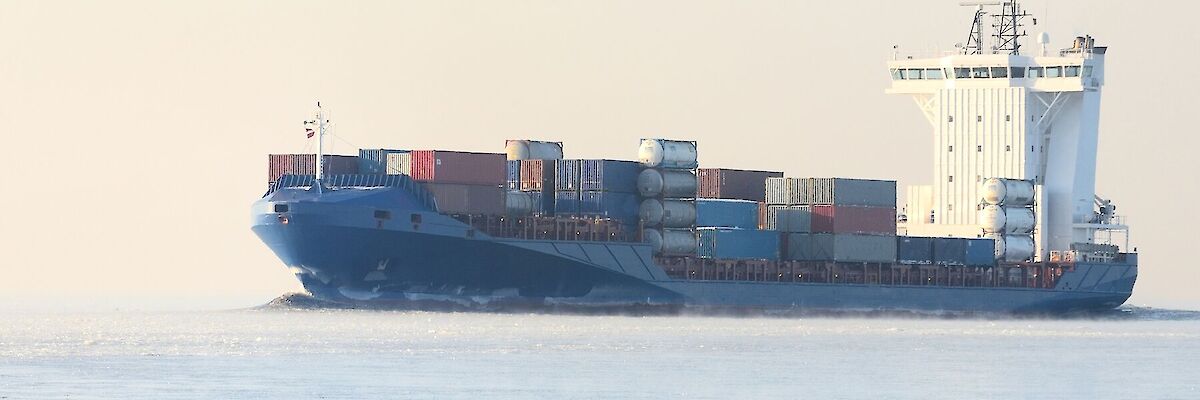
Sound travels far in cold Arctic waters. Whales, seals and walrus rely on it to communicate, navigate and find food – and Arctic shipping is getting louder.
Register to attend- When3 February 2027 (timing TBC)
- WhereVenue to be announced & online
- Linked to3rd Polar Maritime Seminar (1–2 Feb 2027)
About the workshop
PAME will host a pan-Arctic, multi-stakeholder workshop on underwater noise in the Arctic, held on the margins of the Polar Maritime Seminar on 3 February 2027. The workshop supports the Kingdom of Denmark's Arctic Council Chairship priority on underwater noise and builds on PAME's previous work on Arctic underwater noise from shipping.
The workshop brings together Arctic States, Permanent Participants, Observers, the shipping industry, researchers and regulators to move from understanding the problem to agreeing on practical ways to reduce ship noise in Arctic waters.
Workshop co-leads
Arctic States
Kingdom of Denmark
Sweden
Permanent Participants
Inuit Circumpolar Council (ICC)
Arctic Council Observers
WWF
CCU
Who should attend
- Arctic States
- Permanent Participants
- Arctic Council Observers
- Shipowners & operators
- Naval architects
- Bioacousticians
- Maritime administrations
- NGOs
PAME's work on Arctic underwater noise
Shipping, seismic surveys and port construction all add noise to the Arctic Ocean. PAME has worked on Arctic underwater noise for more than 15 years, using its Arctic Ship Traffic Data (ASTD) to map and model noise from Arctic shipping.
-
2009
Arctic Marine Shipping Assessment (AMSA)
First flags ship noise as an issue needing focus in the Arctic.
-
2019
Phase I – State of Knowledge Report
Baseline on ambient sound, noise sources and impacts on Arctic marine life.
-
2021
Underwater Noise Pollution from Shipping in the Arctic
First pan-Arctic map of ship noise, 2013–2019, built on ASTD data.
-
2025
Phase II – Understanding Impacts and Defining Management Solutions
Models noise to 2030 and tests speed reduction, rerouting and quieter ships in Baffin Bay, the Barents Sea and the Chukchi Sea.
-
2027
This workshop
From findings to action, with the Kingdom of Denmark's Chairship. Outcomes will feed into PAME's next Work Plan.
-
2027–2029
Potential new PAME project on Arctic underwater noise
A possible project in the PAME 2027–2029 Work Plan, shaped by the workshop's findings.
How loud is the Arctic Ocean getting?
Typical source levels of human-made underwater noise in the Arctic.
The decibel scale is logarithmic: every +10 dB is ten times more acoustic power. Source: PAME State of Knowledge Report (2019). Values are indicative and measured with different metrics.
Read more on the Underwater Noise in the Arctic project page.
Agenda
The draft agenda will be published here. Presentations will be made available after the workshop.
Registration
Registration is open for in-person and online participation.
Related links
- 2027 Polar Maritime Seminar
- Underwater Noise in the Arctic – PAME project page
- Arctic Ship Traffic Data (ASTD)
- Arctic Shipping Status Reports
- Management of Arctic Marine Oil and Gas Associated Noise
Questions? Contact the PAME Secretariat at pame@pame.is.